
EFFE-G · AUTOMATION, ROBOTICS AND INTRALOGISTICS
From traditional processes
to advanced industry.
Materials, machines and information working together. We help companies find solutions to move materials, manufacture and make decisions with greater control.
Let’s assess your process ↗PROCESS DEVELOPMENT
Innovation starts with how you work today.
Repetitive material handling, hard-to-trace materials, a machine waiting for a part or a tool replaced too late: these are practical starting points for rethinking a process. EFFE-G connects company requirements with the technology expertise and specialist partners needed to develop a solution suited to the production environment.
We support requirements definition, technology scouting and technical and commercial discussions. The process may start with a single workstation and develop towards the integration of departments, warehouses and information systems.
INTELLIGENT INTRALOGISTICS
The right material.
In the right place.
When it is needed.
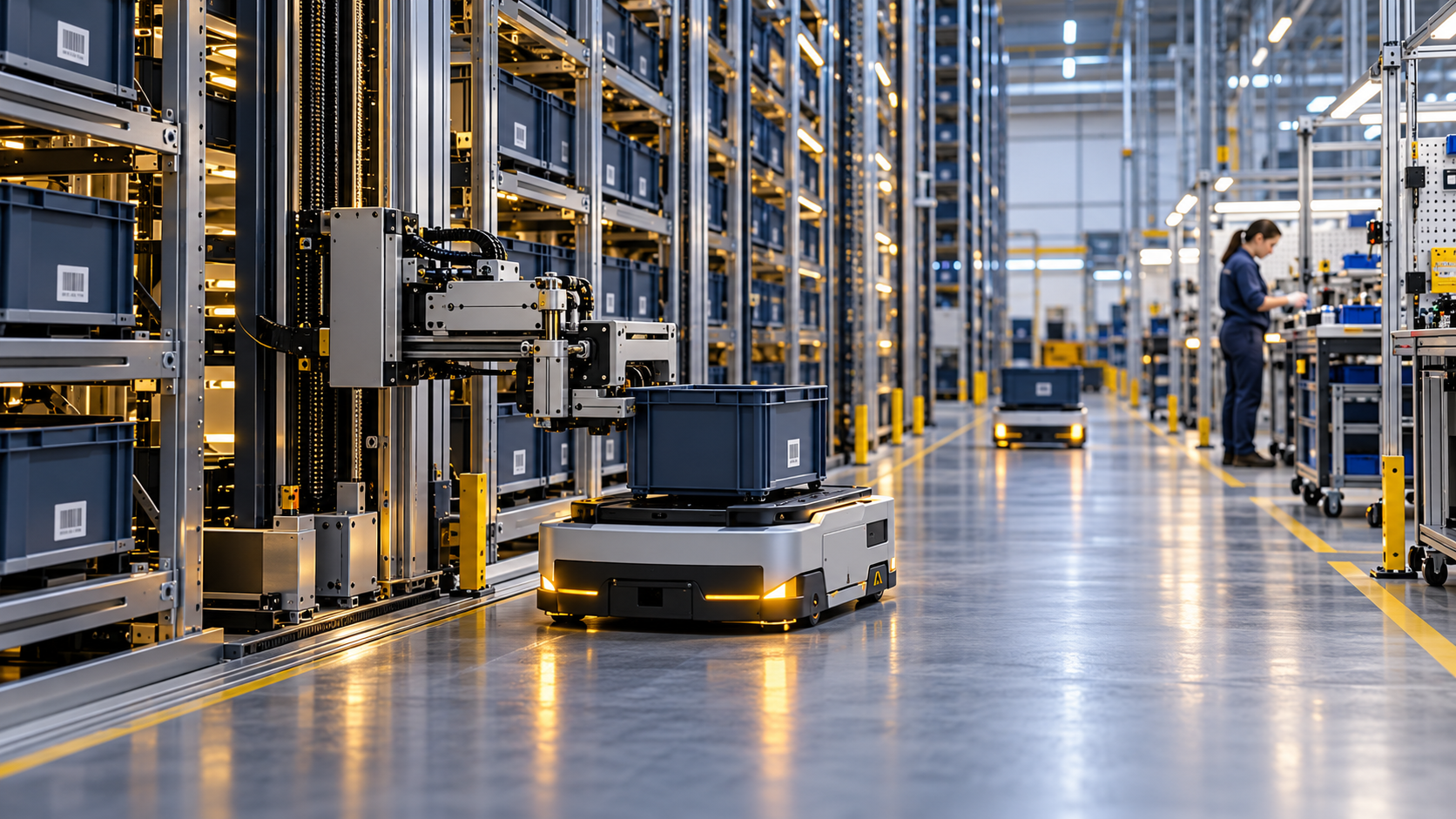
Connecting the warehouse and production means knowing what is available, where it is located and which operation it is intended for. Identification, software and automation can turn these data into operational missions: retrieve the correct container and deliver it to the processing or assembly station.
We assess solutions using AGVs, autonomous mobile robots (AMRs), shuttle systems, automated storage, conveyors and goods-to-person stations that bring materials to the operator.
FROM DATA TO ACTION
A connected flow, from receiving to the workstation.
- 01 · IdentifyLink goods, batches and containers using barcodes, RFID or other suitable systems.
- 02 · LocateRecord location, availability and movements, with updates appropriate to the installation.
- 03 · RetrieveTurn production requirements into a picking or automated retrieval mission.
- 04 · DeliverDeliver materials and kits to processing or assembly stations according to defined priorities and rules.
- 05 · ConfirmRecord delivery, use, returns and any anomalies to update the process.
Functions depend on the technologies, layout, identification and integrations actually available. Traceability does not automatically imply continuous real-time location tracking.
AUTOMATION THAT CONNECTS OPERATIONS
From material handling to machine tending.
Mobile robots and mission management
Transporting materials, work in progress and containers between the warehouse and departments. Assessing routes, priorities, interfaces and coexistence with people and existing vehicles.
Storage, shuttles and picking
Automated storage and retrieval, kit preparation, location identification and links to production requirements.
Robotic arms and cobots
Machine loading and unloading, handling, palletising and assembly support. Applications must be designed with specialists, considering safety, precision and cycle times.
Vision and process verification
Identifying objects and components, checking presence and orientation and performing inspections suited to the part and installation conditions.
DIGITALISATION AND DEVELOPMENT
Beyond automated machines.
A process that makes useful information available.
Value comes from linking what happens on the shop floor to operational decisions. We examine how to collect data from machines, sensors, warehouses and workstations and make them usable through monitoring, dashboards and integration with WMS, MES and ERP systems where compatible.
Operational visibility
Resource status, progress, waiting times, alarms and event history to identify where action is needed.
Traceability and data continuity
Links between materials, operations, equipment and jobs, using identifiable, up-to-date data.
Analysis and simulation
Assessing flows and scenarios, including models and digital twins where justified by the data and objectives.
Rules and applied intelligence
Managing priorities, identifying anomalies and supporting decisions, using algorithms and AI where appropriate and verifiable.
EQUIPMENT AND TOOLS UNDER CONTROL
Know the condition.
Estimate service life.
Prepare the next action.
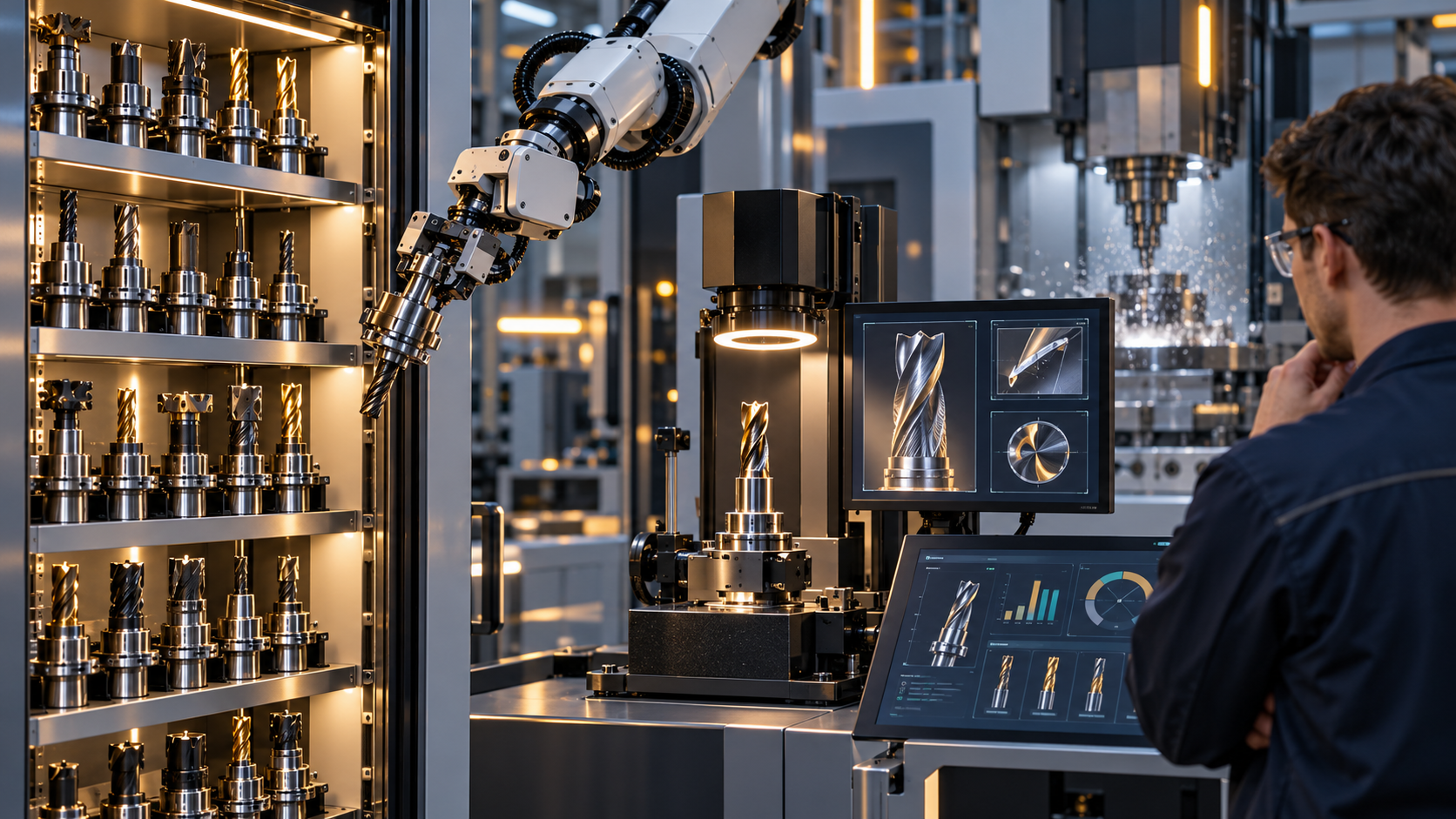
A tool is more than an inventory item. It is a resource with an identity, a usage history and an operating condition. Digital management can connect availability, withdrawals, destination machines, work cycles, inspections, maintenance and replacements.
Suitable measurement and monitoring systems can assess wear indicators, anomalies and functionality. Remaining service life may be estimated using available data, operating conditions and models validated for the application.
ILLUSTRATIVE APPLICATION
From detected wear to replacement requirements.
A system records tool usage and compares signals and inspections against defined thresholds. If deterioration is detected or an expected limit approaches, it can flag the need for inspection or replacement. Linking this information to inventory makes it possible to check for a spare and prepare retrieval or a procurement request.
The workflow may include notifications, reorder proposals and transmission of requirements to the business system or procurement team. Automation is defined using agreed thresholds, responsibilities and approvals; an alarm does not equal an automatic supplier order.
A PATH BUILT AROUND YOUR ACTUAL OPERATIONS
Process first, technology second.
Requirements analysis
Current flows, bottlenecks, materials, layout, constraints and operational objectives.
Scouting and comparison
Technologies and specialist partners, integration options and technical and commercial comparison.
Feasibility and development
Detailed assessment with specialists, a pilot where appropriate, safety requirements and an implementation plan.
Measuring results
Agreed indicators: material handling times, delays, picking errors, tool availability and process-related downtime.
Areas to explore also include humanoid robotics and emerging solutions, assessed for maturity, reliability, safety and suitability for the specific application.
THE NEXT STEP
Which process would you like to improve?
Tell us how you work today, where delays arise and what result you want to achieve. We start with a concrete requirement to identify a path for further assessment.
Describe your process ↗EFFE-G handles requirements scoping, scouting and technical and commercial coordination with specialist partners. Design, integration and outcomes are defined for each project. Images illustrate technology scenarios.